Wide forwards now carry more responsibility than ever.
They’re expected to score 15+ goals, create another dozen, press relentlessly, and often drift into central areas to overload defenses.
The best wingers in the world aren’t just fast—they’re football’s most complete attackers.
This ranking evaluates the 110 best wingers heading into 2025–26, judging them on consistency, end product, shot creation, and influence in critical moments.
Best Wingers in the World 2026
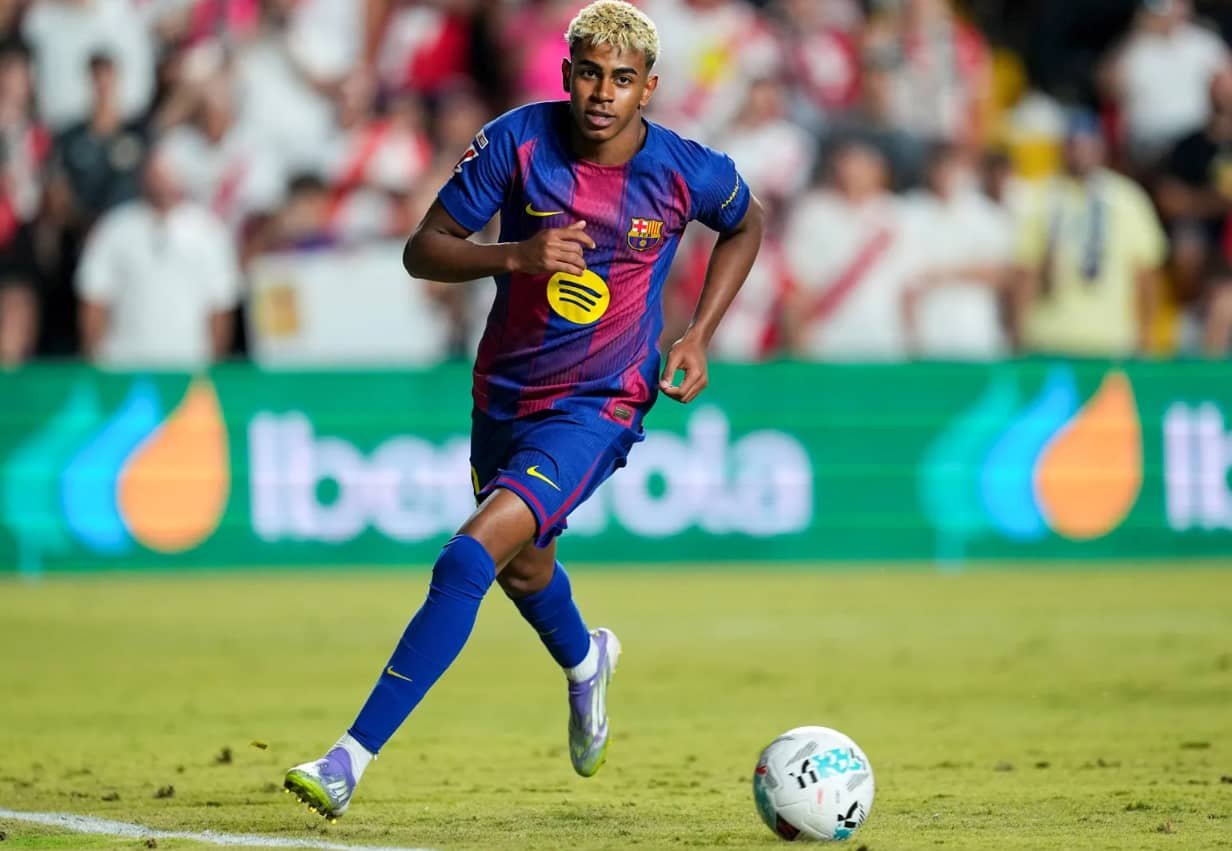
Whether you’re tracking Lamine Yamal’s frightening maturity or wondering where Mohamed Salah still ranks, this breakdown covers the wide attackers shaping the global game right now.
What Makes a Winger Elite in 2026?
Modern wingers operate under three core pressures: score, create, and destabilize. The days of crossing specialists are mostly gone.
Today’s elite wide players cut inside to shoot, drag defenders out of position, and regularly decide matches with individual brilliance.
Criteria used for these rankings:
- Attacking output – Goals and assists matter most. Wingers who consistently deliver double-digit numbers in both categories earn higher placement.
- Chance creation beyond assists – Pre-assists, key passes, and actions that directly lead to shots reveal a player’s true creative impact.
- Big-match influence – Performing against elite opponents, in knockout football, and under tactical pressure separates the best from the good.
- Consistency across competitions – One hot month doesn’t cut it. The rankings favor players who maintain form across league, cup, and continental matches.
- Tactical flexibility – Can they play both sides? Do they adapt to different systems? Versatility adds long-term value.
Top 10 Best Wingers in the World Right Now in 2026
Here’s the elite tier of the wingers dominating world football in 2026.
| Rank | Player | Club | Nation |
|---|---|---|---|
| 1 | Lamine Yamal | Barcelona | Spain |
| 2 | Vinícius Jr | Real Madrid | Brazil |
| 3 | Mohamed Salah | Liverpool | Egypt |
| 4 | Bukayo Saka | Arsenal | England |
| 5 | Raphinha | Barcelona | Brazil |
| 6 | Michael Olise | Bayern Munich | France |
| 7 | Khvicha Kvaratskhelia | PSG | Georgia |
| 8 | Luis Díaz | Liverpool | Colombia |
| 9 | Bradley Barcola | PSG | France |
| 10 | Rodrygo | Real Madrid | Brazil |
1. Lamine Yamal – Barcelona
Why he’s No. 1:
Yamal doesn’t just have talent—he has timing. At 18, he reads defenses like a veteran, knows when to release the ball early, and when to take defenders on.
His combination of dribbling, vision, and composure in the final third makes him the most complete young winger the sport has seen in years.
What sets him apart:
He creates high-quality chances consistently, not just volume. His expected assists numbers are elite, and his ability to operate in tight spaces means he’s dangerous even when marked heavily.
2. Vinícius Jr – Real Madrid
Why he ranks here:
Vinícius forces defensive collapses. His pace and directness pull two defenders toward him, opening space for teammates. Even when his finishing is off, his gravity reshapes the game.
Signature strength:
One-on-one domination. He wins more successful dribbles per 90 than almost anyone, and his acceleration in transition is unmatched.
3. Mohamed Salah – Liverpool
Why he’s still top-tier:
Salah remains one of the most productive attackers in football. His movement off the ball, positioning in the box, and clinical finishing keep him among the world’s best even as younger stars emerge.
What he still does better than most:
Converting half-chances. Salah’s shot conversion rate is consistently elite, and his ability to score from tight angles makes him a constant threat.
4. Bukayo Saka – Arsenal
Why he matters:
Saka is Arsenal’s most reliable attacker—calm under pressure, dangerous in transition, and capable of creating from nothing. His work rate and tactical intelligence make him invaluable beyond just goal contributions.
Key trait:
Clutch performances. Saka shows up in big matches and handles pressure moments with unusual maturity.
5. Raphinha – Barcelona
Why he’s risen:
Raphinha’s output has exploded under the right system. His pressing intensity, willingness to take defenders on repeatedly, and improved decision-making have made him one of Europe’s most dangerous wide forwards.
What he brings:
Relentless energy. He stretches defenses with constant runs and doesn’t let up even when his team is ahead.
6. Michael Olise – Bayern Munich
Why he’s elite:
Olise combines technical elegance with ruthless efficiency. His final ball is among the best in Europe, and his ability to manipulate defenders with feints and body shape makes him a nightmare in the final third.
Best quality:
Set-piece delivery and creativity from dead balls. He’s one of the few wingers who can win matches without touching the ball in open play.
7. Khvicha Kvaratskhelia – PSG
Why he’s here:
Kvaratskhelia operates in the margins—his value often appears in pre-assists, decoy runs, and the way he warps defensive shapes. He’s not always the flashiest, but his impact on team offense is massive.
What makes him different:
Control in chaos. He rarely panics, even when swarmed, and his ability to hold the ball under pressure creates openings for others.
8. Luis Díaz – Liverpool
Why he’s dangerous:
Díaz brings pure attacking aggression. His pace, close control, and willingness to attack defenders repeatedly make him a constant transition threat. He stretches games vertically and forces defensive mistakes.
Defining trait:
Fearlessness. He doesn’t overthink—he sees space and attacks it immediately.
9. Bradley Barcola – PSG
Why he’s rising:
Barcola has grown from a prospect into a high-output forward. His speed in transition and improved finishing have made him one of Ligue 1’s most productive wide attackers.
What he does well:
Running behind defenses. His timing on through balls and off-the-shoulder movement creates scoring chances regularly.
10. Rodrygo – Real Madrid
Why he’s valuable:
Rodrygo is the ultimate big-game player. His movement intelligence, two-footed finishing, and calmness in critical moments make him Madrid’s most reliable wide option in knockout football.
Best skill:
Positional awareness. He drifts into dangerous zones without the ball and punishes defensive lapses ruthlessly.
Best Left Wingers in the World 2026
The left wing is currently home to the most devastating one-on-one attackers and inverted shooters. Here are the standouts:
Elite-tier left wingers:
- Vinícius Jr (Real Madrid)
- Luis Díaz (Liverpool)
- Khvicha Kvaratskhelia (PSG)
- Bradley Barcola (PSG)
- Nico Williams (Athletic Bilbao)
- Rafael Leão (AC Milan)
- Gabriel Martinelli (Arsenal)
High-impact creators:
- Phil Foden (Manchester City)
- Alejandro Garnacho (Manchester United)
- Kaoru Mitoma (Brighton)
- Jérémy Doku (Manchester City)
- Son Heung-min (Tottenham)
- Marcus Rashford (Manchester United)
Best Right Wingers in the World 2026
Right-sided attackers tend to be left-footed inverted wingers who cut inside to shoot or create overloads. Here’s the top tier:
Elite-tier right wingers:
- Lamine Yamal (Barcelona)
- Mohamed Salah (Liverpool)
- Bukayo Saka (Arsenal)
- Raphinha (Barcelona)
- Michael Olise (Bayern Munich)
- Rodrygo (Real Madrid)
Dangerous creators and scorers:
- Pedro Neto (Chelsea)
- Mohammed Kudus (West Ham)
- Takefusa Kubo (Real Sociedad)
- Jarrod Bowen (West Ham)
- Leroy Sané (Bayern Munich)
- Ousmane Dembélé (PSG)
- Bernardo Silva (Manchester City)
Complete Rankings: Top 110 Best Wingers in the World 2026
Ranks 1–10
- Lamine Yamal (Barcelona)
- Vinícius Jr (Real Madrid)
- Mohamed Salah (Liverpool)
- Bukayo Saka (Arsenal)
- Raphinha (Barcelona)
- Michael Olise (Bayern Munich)
- Khvicha Kvaratskhelia (PSG)
- Luis Díaz (Liverpool)
- Bradley Barcola (PSG)
- Rodrygo (Real Madrid)
Ranks 11–25
- Pedro Neto (Chelsea)
- Mohammed Kudus (West Ham)
- Nico Williams (Athletic Bilbao)
- Leroy Sané (Bayern Munich)
- Takefusa Kubo (Real Sociedad)
- Jarrod Bowen (West Ham)
- Savinho (Manchester City)
- Ousmane Dembélé (PSG)
- Johan Bakayoko (PSV)
- Amad Diallo (Manchester United)
- Iñaki Williams (Athletic Bilbao)
- Ángel Di María (Benfica)
- Yeremy Pino (Villarreal)
- Kingsley Coman (Bayern Munich)
- Franco Mastantuono (River Plate)
Ranks 26–50
- Rafael Leão (AC Milan)
- Son Heung-min (Tottenham)
- Phil Foden (Manchester City)
- Gabriel Martinelli (Arsenal)
- Kaoru Mitoma (Brighton)
- Jérémy Doku (Manchester City)
- Federico Chiesa (Liverpool)
- Jack Grealish (Manchester City)
- Bernardo Silva (Manchester City)
- Riyad Mahrez (Al-Ahli)
- Alejandro Garnacho (Manchester United)
- Marcus Rashford (Manchester United)
- Serge Gnabry (Bayern Munich)
- Christian Pulisic (AC Milan)
- Dejan Kulusevski (Tottenham)
- Bryan Mbeumo (Brentford)
- Ferran Torres (Barcelona)
- João Félix (Chelsea)
- Arda Güler (Real Madrid)
- Ademola Lookman (Atalanta)
- Sadio Mané (Al-Nassr)
- Ismaïla Sarr (Crystal Palace)
- Luis Sinisterra (Bournemouth)
- Allan Saint-Maximin (Al-Ahli)
- Antony (Manchester United)
Ranks 51–75
- Moussa Diaby (Al-Ittihad)
- Xavi Simons (RB Leipzig)
- Edon Zhegrova (Lille)
- Wilfried Zaha (Galatasaray)
- Leon Bailey (Aston Villa)
- Brennan Johnson (Tottenham)
- Harvey Barnes (Newcastle)
- Samuel Chukwueze (AC Milan)
- Noni Madueke (Chelsea)
- David Neres (Napoli)
- Ansu Fati (Barcelona)
- Hakim Ziyech (Galatasaray)
- Domenico Berardi (Sassuolo)
- Ritsu Doan (Freiburg)
- Cengiz Ünder (Fenerbahçe)
- Jota (Al-Ittihad)
- Pablo Sarabia (Wolves)
- Tete (Lyon)
- Pedro Gonçalves (Sporting CP)
- Luis Ocampos (Rayados)
- Hirving Lozano (PSV)
- Luis Henrique (Marseille)
- Crysencio Summerville (West Ham)
- Viktor Tsygankov (Girona)
- Karim Adeyemi (Borussia Dortmund)
Ranks 76–110
- Matías Soulé (Roma)
- Álex Baena (Villarreal)
- Jesper Lindstrøm (Everton)
- Dodi Lukébakio (Sevilla)
- Callum Hudson-Odoi (Nottingham Forest)
- Leandro Trossard (Arsenal)
- Noah Lang (PSV)
- Samuel Iling-Junior (Bologna)
- Andreas Skov Olsen (Club Brugge)
- Jesper Karlsson (Bologna)
- Ilias Akhomach (Villarreal)
- Luis Palma (Celtic)
- Facundo Pellistri (Granada)
- Roony Bardghji (Copenhagen)
- Yankuba Minteh (Brighton)
- Ernest Nuamah (Lyon)
- Kevin Schade (Brentford)
- Bryan Gil (Girona)
- Thorgan Hazard (Anderlecht)
- Ivan Perišić (Hajduk Split)
- Rayan Cherki (Lyon)
- Nico González (Juventus)
- Julian Brandt (Borussia Dortmund)
- Johan Mojica (Villarreal)
- Jonathan David (Lille)
- Benjamin Bourigeaud (Rennes)
- Youssouf Fofana (AC Milan)
- Wilfried Singo (Monaco)
- Michael Antonio (West Ham)
- Takehiro Tomiyasu (Arsenal)
- Nico Paz (Como)
- Federico Dimarco (Inter Milan)
- Sergej Milinković-Savić (Al-Hilal)
- Lucas Paquetá (West Ham)
- Randal Kolo Muani (PSG)
How the Modern Winger Role Has Changed?
- Goal-scoring is now non-negotiable
Wingers who don’t hit double digits in goals are considered underperforming, regardless of their creative output. The role has shifted from “creator who sometimes scores” to “scorer who also creates.”
- Inverted wingers dominate
Most elite wingers now play on their “wrong” side—left-footers on the right, right-footers on the left. This allows them to cut inside onto their strong foot to shoot or thread through balls into the box.
- Pressing matters as much as dribbling
High-level teams demand relentless defensive effort from wide players. Wingers who don’t press aggressively or track back rarely last at top clubs, no matter how talented they are offensively.
- Versatility extends careers
The best wingers can play both sides, operate as central attackers when needed, and adapt to different tactical systems. One-dimensional speed merchants struggle to stay relevant.
What Separates the Top 10 from the Rest?
- They influence games without the ball
Elite wingers don’t disappear when they’re not touching it. Their movement creates space for teammates, pulls defenders out of position, and opens passing lanes.
- They deliver in critical moments
Average wingers pad stats against weak opponents. The best perform against elite defenses, in knockout matches, and when their teams need them most.
- They make smart decisions under pressure
When to shoot, when to pass, when to dribble, these choices separate good from great. The top wingers consistently make the right call in chaotic situations.
- They adapt to tactical adjustments
Opponents always plan to stop elite players. The best wingers adjust mid-match, finding new ways to create danger when their first approach gets shut down.
FAQs
- Who is the best winger in the world right now?
Lamine Yamal currently holds the top spot due to his combination of creativity, decision-making, and end product at just 18 years old. His ability to influence matches consistently sets him apart.
- Are inverted wingers better than traditional wingers?
Inverted wingers dominate modern football because they create better shooting angles and overload central areas. Traditional touchline wingers still exist but are rarer at the elite level.
- What’s the difference between a winger and a wide forward?
- The terms are often used interchangeably now. Wide forwards typically play higher up the pitch and focus more on scoring, while wingers may drop deeper to collect the ball and create.
- How important are assists for ranking wingers?
Very important, but not the only metric. Pre-assists, shot creation, and overall offensive impact matter just as much as raw assist totals.
- Why do some talented wingers rank lower?
Consistency is key. Players with elite talent but inconsistent form, injury issues, or limited big-match impact rank below those who deliver week after week.
- Who are the best young wingers to watch?
Lamine Yamal, Bradley Barcola, Franco Mastantuono, Savinho, and Yankuba Minteh are all under 22 and showing elite potential.
Conclusion:
The winger landscape in 2025–26 is defined by ruthless efficiency and tactical intelligence.
The best wide attackers aren’t just fast or skillful; they’re football’s most dangerous match-winners, capable of deciding games with one perfect run or one devastating finish.
Lamine Yamal leads a generation of young stars who don’t play like prospects—they play like proven elite attackers.
Meanwhile, veterans like Salah and Saka continue proving that consistency and smart positioning matter as much as raw ability.
If you’re building a team around wide attackers, look for players who score, create, and adapt. The modern game rewards completeness above everything else.
Want more football rankings and tactical analysis? Bookmark this page and check back regularly for updated player rankings and in-depth breakdowns of the world’s best footballers.
Also Check: