Two teams arrive at Barsapara Stadium carrying baggage from their recent past.
The Rajasthan Royals just traded their captain and changed their entire leadership structure.
Chennai Super Kings finished dead last in IPL 2025 and now face the season without MS Dhoni for two weeks.
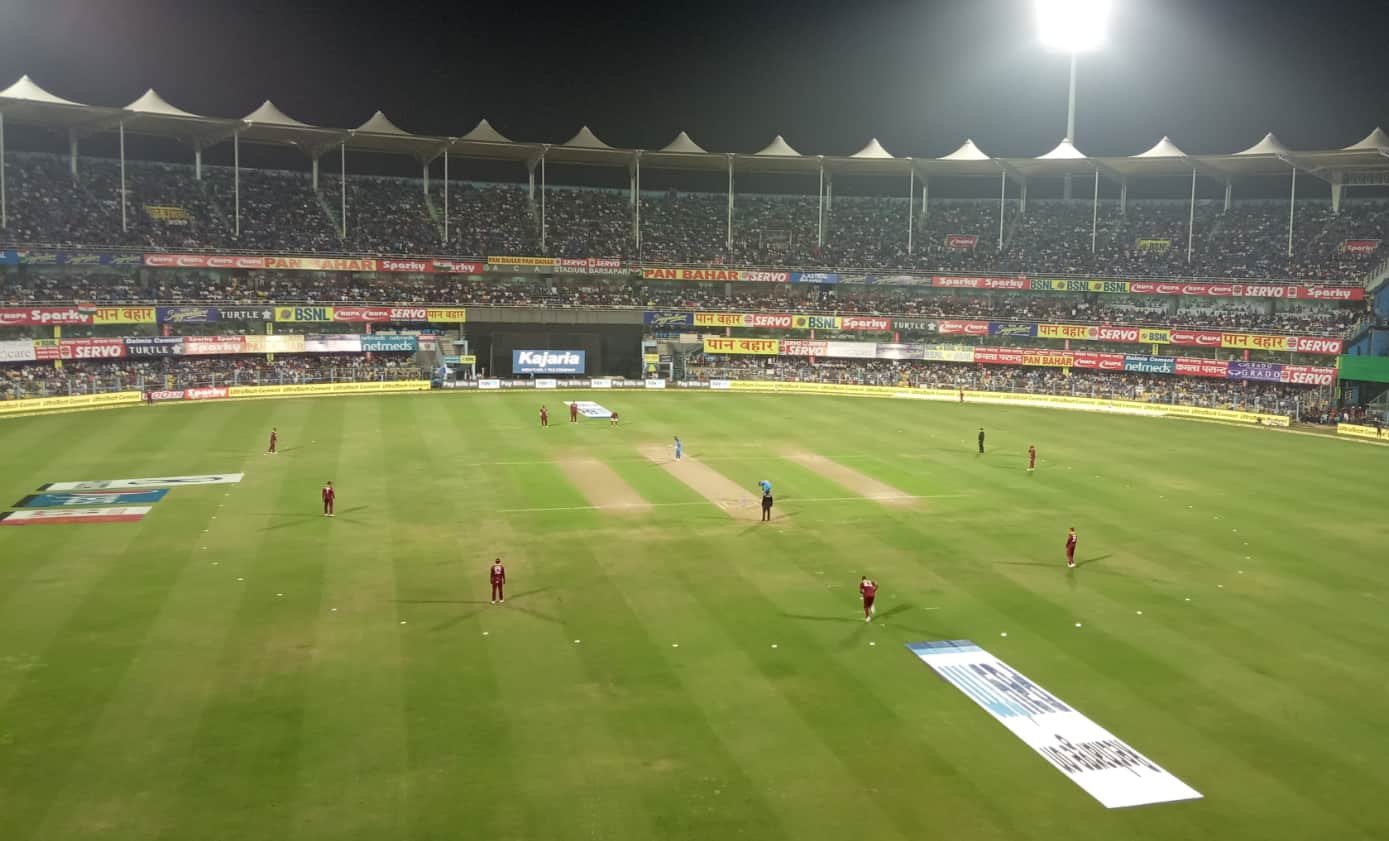
The Barsapara Stadium pitch report becomes the first tactical puzzle both captains must solve.
Knowing how the surface plays helps with team selection, batting order, and bowling combinations.
Rain adds another layer. Weather forecasts show heavy precipitation is likely.
That means DLS calculations, shortened overs, and constant adjustments.
The team that handles chaos better probably wins.
Barsapara Stadium Pitch Report
The Numbers: Six Games, Clear Patterns
Barsapara Stadium has hosted six IPL matches. The data shows consistent trends.
| Match Stat | Result |
|---|---|
| Total matches | 6 |
| Wins defending | 3 |
| Wins chasing | 2 |
| Rain-affected | 1 |
| Avg batting first | 174.6 |
| Avg batting second | 161.6 |
| Runs per over | 8.56 |
| Wickets to pace | 58.33% |
| Wickets to spin | 41.66% |
Teams batting first win half the time. Chasing sides win in two of six games. One match got abandoned, which tells you that weather disruptions happen here.
The 13-run gap between innings matters. Teams setting targets score more freely. Chasing sides face scoreboard pressure that leads to poor decisions and lost wickets.
Understanding the Playing Surface
The Barsapara Stadium pitch report batting or bowling breakdown, clearly favors batters. An average run rate above 8.5 per over shows teams can attack throughout their innings.
The surface is hard and true. The ball comes onto the bat without unexpected bounce or uneven pace. Batters who trust the pitch and play straight score boundaries regularly.
Early morning moisture might help swing bowlers in the first three overs. After that, batting becomes easier. The pitch doesn’t break up or offer variable bounce as the match progresses.
What Batters Need to Know
Top-order batters should capitalize on the powerplay. The field restrictions combined with a true pitch create boundary-scoring opportunities.
Middle-order players inherit good conditions. They need to maintain momentum rather than rebuild. Dot balls become expensive on pitches where run rates naturally sit above 8 per over.
Death-over hitters face straight boundaries and a pitch that doesn’t slow down. Anything pitched in the slot gets launched. Bowlers need perfect execution, or they get punished.
What Bowlers Must Do
Fast bowlers dominate here with nearly 60% of wickets. The Guwahati Stadium pitch report batting or bowling data, confirms that pace matters more than spin.
New ball bowlers get some movement if they pitch it up. But that window closes within the first six overs. After that, variations become more important than pace or swing.
Spinners who flight the ball take risks. The pitch doesn’t turn sharply enough to beat batters through dip and grip. Dartier, flatter trajectories work better for control.
Death bowlers need yorkers and slower balls. Wide yorkers outside off stump limit scoring options. Slower bouncers can induce mistimed shots. Everything else gets hit.
Weather: The Variable Nobody Controls
March 30 looks rough based on current forecasts.
| Condition | Forecast |
|---|---|
| Temperature | 19°C |
| Wind | E 7 km/h |
| Rain chance | 90% |
| Cloud cover | 74% |
The Barsapara Stadium weather report shows 90% precipitation probability. That’s not “might rain.” That’s “will rain, question is when and how much.”
Temperature at 19°C keeps players comfortable between rain breaks. Humidity will be high, though, making the ball slippery for bowlers and sweaty for fielders.
Clouds at 74% coverage mean overcast conditions all day. Swing bowlers might get help throughout rather than just with the new ball.
DLS Math and Strategic Adjustments
Rain interruptions trigger Duckworth-Lewis-Stern calculations. Understanding how DLS works helps teams make smarter decisions during the match.
Teams batting first should accelerate earlier if rain threatens. Reaching 140 in 15 overs beats scoring 100 in 15 overs, even if the final target would have been 180.
Teams chasing should preserve wickets above all else. DLS heavily weighs wickets remaining.
Losing three wickets while scoring 50 in 8 overs is worse than losing one wicket while scoring 45 in 8 overs.
Both teams need clear communication between the dugout and the middle. Weather changes fast, and captains might need to switch strategies mid-innings.
Score Expectations Based on History
The barsapara stadium pitch report average score sits at 174.6. That sets the baseline for competitive totals.
Anything below 165 feels light. Teams with strong batting lineups can chase 160 even after losing early wickets.
Between 170 and 185 creates real contests. Both teams need partnerships and smart batting to win from either position.
Above 185 puts massive pressure on chasing sides. Very few teams successfully chase 190-plus at any venue. Barsapara shows no exception to that rule.
The barsapara stadium pitch report highest score from IPL matches reaches near 190. Someone could push past 200 if the weather stays clear and everything clicks. But don’t bet on it.
How RR Should Play This Match?
Rajasthan Royals have the tools to post 180-plus. Yashasvi Jaiswal can destroy attacks in the powerplay. If he scores 40 before the sixth over, RR could reach 190.
Riyan Parag bats somewhere between three and five. His new captaincy role might affect his batting approach. He needs to trust his instincts rather than play overly cautious cricket.
Sam Curran and Ravindra Jadeja give RR balance. Both can bat at six or seven and bowl four overs each. That flexibility helps when adjusting to match situations.
RR’s bowling depends on taking powerplay wickets. If CSK reaches 60 for one after six overs, defending becomes much harder. Early breakthroughs change everything.
RR’s Best XI for These Conditions
Three frontline pacers plus Curran’s pace give RR four seam options. That matches the pitch profile perfectly.
Jadeja as the lone spinner, provides control. He won’t take five wickets, but he’ll keep runs down in the middle overs while others attack.
Batting depth to number eight allows RR to keep attacking even after losing wickets. That approach suits a pitch where run rates naturally stay high.
What CSK Needs Without Dhoni?
Chennai Super Kings miss more than just Dhoni’s batting. They lose his tactical brain, his calm during pressure, and his ability to read match situations.
Ruturaj Gaikwad shoulders enormous responsibility. He opens, captains, and needs to score runs. That’s a heavy load for someone new to leadership.
The middle order must contribute. CSK can’t rely on Gaikwad alone. They need at least two other batters reaching 35-40 to post competitive totals.
CSK’s bowling keeps them competitive. They have experienced pacers who can exploit early conditions. If they take three wickets in the powerplay, they’re in the game regardless of who bats later.
CSK’s Path to Victory
Bowl tight in the powerplay. Don’t let Jaiswal attack freely. One or two early wickets change the entire complexion of the match.
Build partnerships while chasing. Quick wickets doom chases on any pitch. Steady partnerships, even at seven runs per over, keep CSK in control.
Use rain breaks smartly. CSK’s experience should help them refocus faster after interruptions. That mental edge could decide a tight contest.
The Toss and Its Impact
Toss decisions get complicated with rain expected.
In normal conditions, batting first makes sense. The pitch plays consistently, and 175-180 defends well more often than it gets chased.
With 90% rain probability, bowling first becomes tempting. DLS often helps chase teams when matches get shortened.
Both captains will monitor weather updates right until toss time. If rain looks likely in the second innings, bowl first. If the forecast clears temporarily, bat first.
Key Battles to Watch
Yashasvi Jaiswal vs CSK new ball attack: Jaiswal’s aggressive style works on this pitch. CSK needs early wickets, or they’re chasing 185-plus.
Ruturaj Gaikwad vs RR pace attack: Gaikwad plays pace well but struggles against quality swing bowling early. His dismissal timing affects CSK’s entire innings.
Death bowling execution: The pitch stays true, so yorkers must be perfect. Curran vs CSK’s lower order could decide the match.
Captaincy under pressure: Parag and Gaikwad both lead their teams for the first time this season. Who handles in-match pressure better?
What the Pitch Report Actually Means for Fans
Expect high scores if the weather cooperates. Both teams have the batting firepower to cross 175.
Early wickets swing momentum dramatically. Teams losing three wickets in six overs rarely post 170-plus.
Pace bowling determines outcomes. The team whose seamers execute better in powerplay and death overs probably wins.
Rain creates chaos. If DLS comes into play, the match becomes partially about luck and timing. That’s frustrating but unavoidable.
FAQs
- What score is safe at Barsapara Stadium?
180-plus gives teams a strong chance of winning. Anything below 170 can be chased if the batting team builds partnerships. The average defending score is 174.6.
- How much does rain affect the match?
Very significantly. The forecast shows 90% rain probability. Multiple interruptions are likely. DLS calculations will probably decide the final result if rain reduces overs.
- Who has the advantage if rain shortens the match?
Generally, the chasing team benefits from DLS calculations. Wickets in hand matter enormously in shortened games. Teams should prioritize preserving wickets over scoring quickly.
Is this pitch better for batting or bowling?
Batting dominates here. The average run rate is 8.56 per over. Fast bowlers take more wickets than spinners, but batters score freely throughout the innings.
- What should the toss winner choose?
Without rain, bat first. With 90% rain forecast, bowl first might be smarter. DLS often favors teams chasing in shortened matches.
Bottom Line
The Barsapara Stadium pitch report shows a surface that rewards attacking cricket.
Batters who trust the bounce and play their shots will score runs. Bowlers need variations and precision rather than relying on pitch assistance.
Rain turns everything uncertain. A 90% precipitation chance means both teams must prepare for interruptions, DLS scenarios, and constant strategy adjustments.
Rajasthan Royals look better equipped for these conditions. Their batting lineup suits a true pitch, and their bowling attack matches the pace-friendly profile.
Chennai Super Kings can win if their experienced players step up. Without Dhoni, they need collective contributions rather than individual brilliance.
Match 3 could be high-scoring, weather-interrupted, and decided by margins smaller than the scorecard suggests. That’s IPL cricket at its unpredictable best.
Also Check: