Before Jackie Robinson broke baseball’s color barrier in 1947, some of the game’s most talented players competed in the Negro Leagues.
These weren’t minor league players waiting for their shot—they were world-class athletes who could have dominated in any era.
The greatest Negro League players combined raw talent with resilience, performing at an elite level despite facing segregation, inconsistent schedules, and financial instability.
Many barnstormed against major league teams and won. Their legacy lives on in the Hall of Fame and in the stories passed down by those who witnessed their brilliance.
Top 10 Greatest Negro League Players of All Time
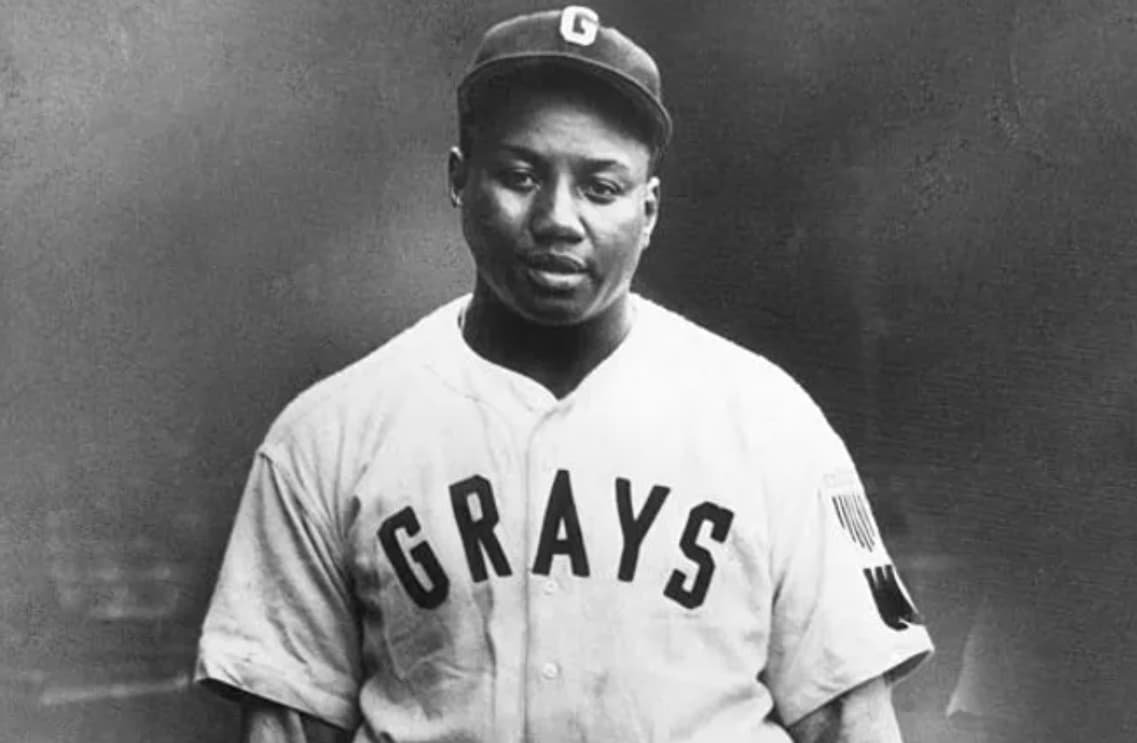
Here are the ten greatest Negro League players who changed baseball forever.
1. Josh Gibson – The Black Babe Ruth
Josh Gibson remains the most iconic power hitter in Negro League history.
Playing primarily for the Homestead Grays and Pittsburgh Crawfords, Gibson was credited with hitting nearly 800 home runs across his career, though exact numbers are difficult to verify due to incomplete records.
What’s undeniable is his reputation. Monte Irvin, who played alongside Willie Mays and against Hank Aaron, said Gibson was better than both.
Gibson’s career batting average hovered around .350, and he combined power with a strong defensive presence behind the plate.
He died in 1947 at just 35 years old, three months before Robinson integrated the majors. Many believe he would have been the first black player in MLB if his health had held up.
2. Satchel Paige – The Greatest Pitcher
Satchel Paige didn’t just dominate the Negro Leagues—he became a cultural icon.
Known for his blazing fastball, pinpoint control, and showmanship, Paige pitched well into his 40s and eventually joined the Cleveland Indians in 1948 at age 42.
Even at that age, he posted a 6-1 record and helped Cleveland win the World Series. In his Negro League prime, Paige was nearly unhittable.
He once struck out Rogers Hornsby five times in a single exhibition game and regularly beat major league all-star squads during barnstorming tours.
Paige’s longevity and competitiveness made him a legend across multiple generations.
3. Oscar Charleston – The Best All-Around Player
If you’re looking for the Negro Leagues’ equivalent to Willie Mays, it’s Oscar Charleston.
A center fielder with power, speed, and elite defense, Charleston was the complete package.
His estimated career batting average sits around .350, and he was a legitimate 40-homer, 40-steal threat.
Contemporaries described him as fearless on the bases and in the field, with a left-handed swing that sent balls to all parts of the park.
Charleston later became a successful manager, but his playing days defined excellence. He was inducted into the Baseball Hall of Fame in 1976.
4. Cool Papa Bell – The Fastest Man in Baseball
James “Cool Papa” Bell was so fast that legends grew around his speed.
One famous story claims he could turn off a light switch and be in bed before the room went dark. While exaggerated, it speaks to how his speed dominated games.
Bell hit .337 over his career and was an eight-time All-Star. His style resembled Ichiro Suzuki, but with even more aggression on the base paths.
He could stretch singles into doubles, steal bases at will, and cover enormous ground in center field.
Bell played for the St. Louis Stars, Pittsburgh Crawfords, and Homestead Grays before being elected to the Hall of Fame in 1974.
5. Buck Leonard – The Black Lou Gehrig
Buck Leonard spent 17 seasons with the Homestead Grays, forming one of baseball’s greatest power duos alongside Josh Gibson.
A smooth-swinging first baseman, Leonard hit for average and power while playing Gold Glove-caliber defense.
He hit over .300 consistently and was known for his clutch hitting in big games.
Leonard’s professionalism and leadership made him a cornerstone of the Grays dynasty, which won nine consecutive Negro National League pennants.
After his playing days, Leonard became an advocate for recognizing Negro League achievements.
He was inducted into the Hall of Fame in 1972.
6. Martin Dihigo – The Original Two-Way Star
Long before Shohei Ohtani, there was Martin Dihigo. The Cuban-born star could pitch, hit for power, and play nearly every position at an elite level.
Dihigo twice led the Negro Leagues in home runs and once defeated Satchel Paige in a pitching duel.
In 1938, while playing in the Mexican League, he went 18-2 with a 0.90 ERA and led the league with a .387 batting average. Yes, in the same season.
He’s the only player enshrined in the baseball halls of fame in the United States, Cuba, Mexico, and Venezuela.
7. Smokey Joe Williams – The Strikeout King
Standing 6-foot-4, Joe Williams was an intimidating right-hander with a fastball that rivaled any pitcher of his era.
He struck out 20 batters in a single game on multiple occasions and routinely beat major league teams during exhibitions.
Williams pitched into his 40s and remained dominant throughout.
His contemporaries considered him equal to or better than Walter Johnson, the greatest pitcher of the deadball era.
Though he never played in the majors, his legacy as one of the best pitchers ever is secure.
8. Willie Wells – The Defensive Wizard
Willie Wells revolutionized shortstop play. A smooth fielder with excellent range, Wells made plays others couldn’t reach.
He also hit over .300 consistently and provided power from a position that typically offered little offense.
Wells was one of the first players to wear a batting helmet after being hit in the head by a pitch in 1942.
His intelligence and innovation extended beyond the field—he was respected as one of the game’s sharpest minds.
He was inducted into the Hall of Fame in 1997.
9. Ray Dandridge – The Slick-Fielding Third Baseman
At just 5-foot-7, Ray Dandridge didn’t look like a typical third baseman.
But his glove work was so exceptional that he earned comparisons to Ozzie Smith and Brooks Robinson.
Dandridge combined elite defense with a .350-plus career batting average.
He played well into his 30s and was signed by the New York Giants, though he never received a call-up to the majors despite dominating Triple-A.
Many believe age discrimination kept him from the majors, but his Hall of Fame induction in 1987 cemented his legacy.
10. Leon Day – The Overlooked Ace
Leon Day may be the most underrated pitcher in baseball history.
A hard-throwing right-hander with a unique no-windup delivery, Day was nearly unhittable at his peak.
Some of his teammates claimed he was better than Satchel Paige.
Day pitched a no-hitter on Opening Day in 1946 after returning from military service in World War II, and he excelled both on the mound and at the plate.
He was finally inducted into the Hall of Fame in 1995, years after his death.
FAQs
- Who was the best hitter in the Negro Leagues?
Josh Gibson is widely considered the best hitter, with a career batting average of around .350 and nearly 800 home runs credited to his name, though exact totals are debated.
- Did Negro League players ever face major league teams?
Yes. During barnstorming tours, Negro League teams regularly played and often defeated major league all-star squads, proving their talent was equal or superior.
- How many Negro League players are in the Hall of Fame?
As of now, over 35 players, managers, and executives from the Negro Leagues have been inducted into the Baseball Hall of Fame in Cooperstown.
- Who was the fastest player in the Negro Leagues?
Cool Papa Bell is universally regarded as the fastest, with legendary speed that made him a constant threat on the bases and in the outfield.
- When did the Negro Leagues end?
The Negro Leagues began to decline after Jackie Robinson integrated the MLB in 1947. The last Negro League season was played in 1960, though attendance had dropped significantly by then.
- Could Negro League players have succeeded in the majors?
Absolutely. Players like Jackie Robinson, Willie Mays, and Hank Aaron came from the Negro Leagues and became all-time greats. Many Negro League stars would have dominated if given the chance.
Conclusion:
The greatest Negro League players didn’t just compete; they excelled against anyone, anywhere.
From Josh Gibson’s titanic home runs to Satchel Paige’s legendary arm, these athletes proved their greatness every time they took the field.
Their stories remind us that talent doesn’t wait for opportunity.
These players built their own legacy, and baseball is richer because of them.
Also Check: