Not every cricket match comes with a series attached.
Sometimes a fixture stands alone on the calendar. One team, one opponent, one game.
No return leg, no series lead to build, no rubber match to look forward to.
These are one-off tournaments and matches, and cricket has more of them than casual fans often realise.
They appear across Tests, ODIs, and T20Is. They affect rankings and career records the same way any official match does.
And they produce a kind of cricket that series games rarely match for intensity.
One-Off Tournaments
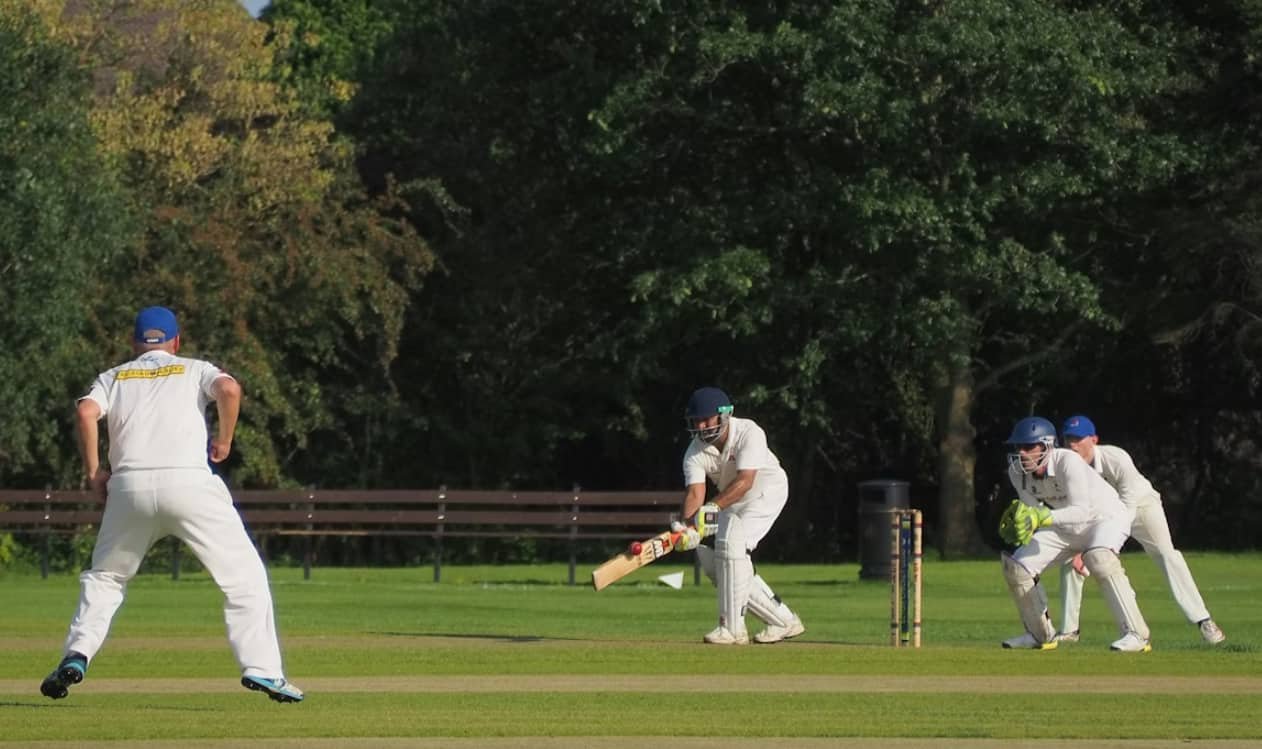
This guide covers everything worth knowing about them.
Quick Answer:
A one-off tournament in cricket is a standalone competition not attached to a recurring league or bilateral series. It may be a single match or a short event like a tri-series. All fixtures carry full ICC status and count toward rankings, player statistics, and career records.
What Is a One-Off Tournament in Cricket?
The term “one-off” simply means it happens once and isn’t part of a structured repeat.
In cricket, that plays out in three ways:
- One-off Test: A single Test between two nations, standing alone on the schedule rather than forming part of a 2, 3, or 5-match series.
- One-off ODI or T20I: A limited-overs international played as a single, isolated fixture. No matches before it, none after it.
- One-off tournament: A short competition, typically 7 to 14 days, involving 3 or 4 teams with a fixed format and a final. It doesn’t recur on the following year’s calendar.
What these have in common isn’t just the format. It’s the absence of correction. In a series, you can drop a match and come back. In a one-off, the first game is the last game.
Why These Fixtures Exist?
One-off events aren’t filler. There’s always a specific reason a board chooses this format.
- The calendar has a gap. International cricket runs almost continuously throughout the year. When a tour window is narrow, one match is better than none.
- A nation is making its debut. The ICC grants Test status to qualifying countries. Their first official match is nearly always a standalone fixture. Afghanistan played India in 2018 for their first-ever Test. Ireland faced Pakistan the same year, also as a one-off.
- The occasion deserves its own game. India’s 2015 one-off Test against Bangladesh in Fatullah was scheduled because it was Bangladesh’s 100th Test. A regular series number wouldn’t have honoured that.
- Budget constraints. A full bilateral series requires significant investment from both boards. A single match, especially on neutral or home soil, costs considerably less.
- Experimenting with format or personnel. A standalone event gives a board space to try combinations, rules, or conditions without the pressure of a series result riding on the experiment.
One-Off Tests: Format and Famous Examples
How do they play out tactically?
A one-off Test runs for up to five days with the same rules as any other Test. The difference is in how teams approach it.
In a series, captains think in phases. They might bat conservatively in the first match and change their approach based on what they learn. In a one-off Test, no learning period carries into the next game. Everything a team has must come out in these five days.
That creates bolder captaincy. Earlier declarations. More attacking bowling rotations from day one. Less tolerance for slow over rates or defensive field placements.
Memorable One-Off Tests
- Afghanistan vs India, Bengaluru, 2018: Afghanistan’s debut Test. India won in two days. The result was one-sided, but the occasion was historic. Afghanistan was playing its first-ever Test match with full ICC recognition behind it.
- India vs Bangladesh, Fatullah, 2015: Bangladesh’s 100th Test. Persistent rain interrupted the game, which ended in a draw. The result was almost irrelevant. The milestone was the point, and a one-off Test was the right frame for it.
- Afghanistan vs New Zealand, Greater Noida, 2024: Scheduled as Afghanistan’s first-ever Test against New Zealand. The rain made the match unplayable. Not a single delivery was bowled. The game was abandoned, but its place on the calendar confirms how established Afghanistan’s Test schedule has become.
One-Off ODIs and T20Is
Stand-Alone ODIs
- World XI vs Australia, Melbourne, 2005: The ICC put together a World XI squad to play Australia in a short series that included a one-off ODI. Australia won clearly, but the match is remembered because the concept of a World XI game is rare enough to generate interest every time it comes up.
- England vs New Zealand, Lord’s, 2019 (World Cup Final): Every ICC tournament final is structurally a one-off match. The 2019 edition is the extreme case. The match is tied. The Super Over tied. England were declared champions on boundary count. A single game settled who the best ODI team in the world was, and it did it in the most debated way cricket has seen.
Stand-Alone T20Is
- Australia vs South Africa, Johannesburg, 2006: One of the earliest T20 internationals, and the only T20I on that tour. The format was still finding its place in the international calendar. It has come a long way since.
One-off T20Is now serve specific purposes: ICC event warm-ups, tribute matches, season openers, and fixtures that fill short windows where a series wouldn’t fit. They’re the most flexible format for this kind of arrangement.
One-Off Tournaments Standings: How They Work?
Whether a standings table exists depends on the format.
- Single match: No standings. One result, end of story.
- Tri-series: Three teams play each other once in a group stage. Points and net run rate determine who reaches the final.
- Four-team tournament: A mini round-robin followed by knockout rounds. Standings cover the group stage only.
Here’s what a standard tri-series points table looks like:
| Team | Played | Won | Lost | Points | NRR |
|---|---|---|---|---|---|
| Team A | 2 | 2 | 0 | 4 | +1.12 |
| Team B | 2 | 1 | 1 | 2 | +0.43 |
| Team C | 2 | 0 | 2 | 0 | -1.55 |
When the format is purely a single match, there’s no table at all. The scorecard is the only record that needs updating.
One-Off Tournament Schedule: Finding Fixtures
One-off events tend to be confirmed on shorter notice than bilateral series. They fill windows that open up in the FTP calendar, often a few months before the fixture date.
A short tri-series typically runs across 10 to 14 days:
| Day | Fixture | Venue | Local Time |
|---|---|---|---|
| Day 1 | Team A vs Team B | Dubai | 7:30 PM |
| Day 4 | Team B vs Team C | Sharjah | 3:30 PM |
| Day 7 | Team A vs Team C | Abu Dhabi | 7:30 PM |
| Day 10 | Final | Dubai | 7:30 PM |
To track upcoming one-off fixtures, ESPNcricinfo’s international schedule section and the ICC’s official website are the most reliable sources.
One-Off Tournaments in India
India is involved in more commercially significant one-off fixtures than any other country.
The audience size makes even a single match worth broadcasting globally, which gives the BCCI flexibility to schedule stand-alone games that other boards couldn’t justify on the same terms.
One-off T20Is feature regularly in India’s calendar as ICC event warm-ups.
The BCCI has also used standalone domestic challenge matches as season openers, typically pitting the reigning IPL champion against a combined India XI.
These aren’t part of any series. They exist as single events with a defined commercial and preparation purpose.
One-Off Tournaments Across Asia
The UAE has become the most active neutral venue for Asian one-off fixtures.
Afghanistan uses it regularly for home internationals, given the infrastructure limitations in Kabul.
Pakistan hosted international cricket in the UAE for several years when security conditions made home hosting difficult.
The Asia Cup has also taken on a one-off tournament character in years when a full-length edition doesn’t fit the FTP window.
A condensed version with fewer teams and a shorter schedule functions as a standalone event rather than a recurring competition.
Stats from One-Off Matches: What Counts
Everything.
A century in a one-off Test appears in the same career batting record as one scored in any other Test.
Five wickets in a one-off ODI count toward career bowling figures.
Ranking points move after every officially sanctioned fixture, including stand-alone games.
For players approaching milestones, this matters.
A one-off Test might be the game where someone reaches 100 caps, 5,000 Test runs, or 200 Test wickets. The fixture context doesn’t change the stat.
What a one-off match can’t offer is the chance to build on a good performance in the next game of the same series.
The record is permanent. The context ends when the match does.
What to Expect in 2026?
The 2026 calendar has several likely slots for one-off tournaments, mostly in the lead-up to ICC event qualification and preparation cycles.
- Tri-series warm-ups. Multiple boards are planning short tri-series in the months before major ICC events. These 7-10 day competitions are one-off tournaments by structure, with no scheduled return the following year.
- High-profile stand-alone deciders. Some boards are in discussion about single white-ball matches between top-ranked nations as commercial products. No recurring commitment, just one game with a clear result.
- India’s domestic challenges. The BCCI is expected to continue its season-opening challenge format. One game, IPL champion vs. combined XI, before the international schedule begins.
- More Asian fixtures in neutral venues. Afghanistan and other emerging Asian Test nations will continue scheduling stand-alone games in the UAE, with their programmes now substantial enough to attract quality opposition.
FAQs
- Are one-off matches official international cricket?
Yes, if sanctioned by the ICC. One-off Tests, ODIs, and T20Is all carry full international status and count toward rankings and career statistics.
- What is the difference between a one-off match and a series match?
A series match is one game within a multi-game set. A one-off match stands alone, with no other games in the same contest before or after it.
- Can a one-off match be played between associate nations?
Yes. Associate nations with official ICC status can play sanctioned one-off fixtures. Their stats count if the ICC has granted the relevant match status.
- Do one-off T20Is count toward the ICC T20I rankings?
Yes. All officially sanctioned T20 internationals, including stand-alone fixtures, affect ICC T20I team and player rankings.
- How do boards decide the venue for one-off tournaments?
Venue depends on hosting rights, FTP agreements, and available facilities. Neutral venues like the UAE are common for Asian boards with logistical constraints.
- Will there be one-off tournaments in 2026?
Yes. Several boards have indicated plans for tri-series warm-ups and stand-alone fixtures in 2026, particularly ahead of ICC event preparation windows.
Conclusion:
One-off tournaments are a real, official, and consequential part of how cricket is organised.
They’re not warm-up games or exhibitions. They count for everything, rankings and records track.
What separates them from series cricket isn’t status. Its structure. There’s no next match.
No chance to recover from across games. What happens in one fixture is the complete picture.
That’s why these matches produce some of cricket’s clearest memories. The 2019 World Cup Final.
Afghanistan’s debut Test. A stand-alone T20I between two top sides with nowhere to hide.
If a one-off fixture lands on the schedule, it’s worth your attention.
Also Check: