Ask ten cricket fans what a Ranji Trophy player earns. Most will say something vague.
A few will guess based on IPL contract headlines and land nowhere close.
The truth is both more interesting and more nuanced than most people expect.
The Ranji Trophy player salary in 2026 is structured around experience and playing time.
It rewards long careers in first-class cricket.
And it is about to get significantly more competitive if the BCCI reform proposals move forward.
Here is every number you need, explained clearly.
Ranji Trophy Player Salary 2026: The Core Pay Structure
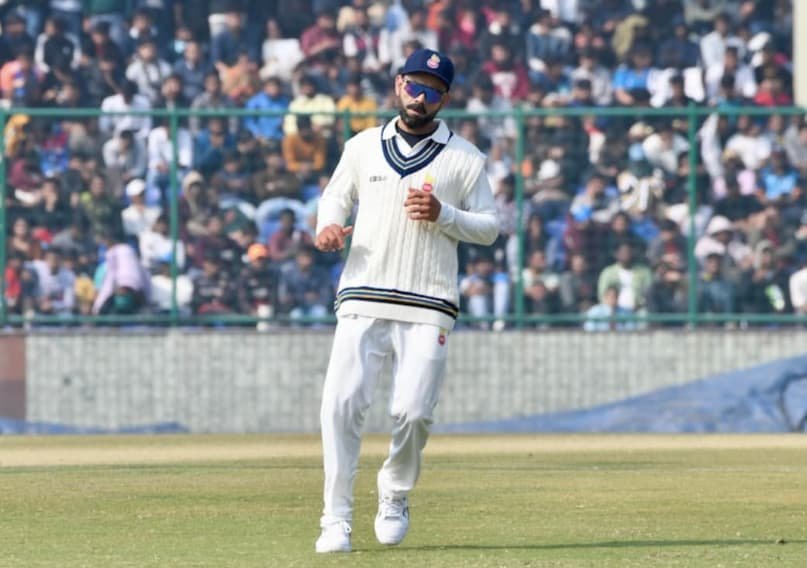
The BCCI pays Ranji Trophy players a daily match fee. There is no fixed monthly salary, no retainer for simply being registered on the state side. Players earn when they play, and the rate depends on two variables.
- First: career experience. The BCCI groups players into three brackets based on total first-class matches played. This includes all BCCI-sanctioned first-class cricket, not just Ranji Trophy appearances. Duleep Trophy, Irani Cup, and India A matches count.
- Second: squad role. Playing XI members earn the full bracket rate. Reserves earn half. Non-playing squad members earn a flat daily fee.
The 2026 structure in full:
| Career First-Class Matches | Playing XI (Per Day) | Reserve (Per Day) |
|---|---|---|
| 41–60 matches | ₹60,000 | ₹30,000 |
| 21–40 matches | ₹50,000 | ₹25,000 |
| 0–20 matches | ₹40,000 | ₹20,000 |
| Non-playing squad members | ₹25,000 | — |
A standard Ranji Trophy group match is four days. A knockout match carries a fifth reserve day.
That means a senior player in the playing XI earns ₹2.4 lakh per group match, rising to ₹3 lakh if a knockout goes five days.
Ranji Trophy Player Per Match Fees: What Each Bracket Pays?
41–60 Matches: The Senior Tier
This bracket covers experienced state regulars, typically players in their late 20s or 30s with long domestic careers. Many carry India A or previous international exposure.
- Per match (four days): ₹2.4 lakh.
- Per five-day knockout: ₹3 lakh.
These players are usually the backbone of competitive state sides, which means they also tend to play the most matches per season, compounding their earnings advantage over younger squad members.
21–40 Matches: Established Contenders
Mid-career players who have secured a state place but are still building their first-class record.
Daily rate: ₹50,000. Per four-day match: ₹2 lakh.
This bracket often includes players who have had IPL exposure or India A appearances but have yet to receive full international recognition.
The income from domestic cricket at this level is solid for the age group.
0–20 Matches: Newcomers and Rising Players
The entry bracket. Players from debut through their first 20 first-class matches.
- Daily rate: ₹40,000.
- Per four-day match: ₹1.6 lakh.
Young cricketers in this bracket typically sit alongside state contracts from their local cricket association.
The combined income is meaningful for players in their early 20s, especially those from smaller cities and towns without alternative income sources.
How Ranji Trophy Salary Builds Across a Full Season?
A complete Ranji Trophy season runs from October to late February.
Teams play group matches, then advance to knockouts if they qualify.
A full campaign to the final typically involves nine to ten matches.
Earnings per season for a senior player (41+ matches, playing XI):
| Stage Reached | Matches | Total Days (Approx.) | Senior Player Earnings (₹) |
|---|---|---|---|
| Group stage (4 matches) | 4 | 16 | ₹9.6 lakh |
| Group stage (6 matches) | 6 | 24 | ₹14.4 lakh |
| Quarterfinal exit | 7 | 28 | ₹16.8 lakh |
| Semifinal exit | 8 | 32 | ₹19.2 lakh |
| Final appearance | 9–10 | 36–40 | ₹21.6–24 lakh |
For a player in the 0–20 bracket, reduce these figures by one-third.
A young player on a final-reaching team earns roughly ₹14.4–16 lakh in match fees.
The difference in earnings between a first-round exit and a final appearance can be ₹12–14 lakh for a senior player.
Playing for a competitive state side with deep knockout runs has a real and direct financial impact.
Reserve Day Earnings: A Closer Look
Knockout matches include a scheduled reserve day five.
If the match finishes inside four days, that fifth day is not played, and no fee is paid.
But if the match extends, every member of both squads earns a full extra day.
For a senior playing XI member, one reserve day means ₹60,000 extra.
In a deep knockout run of three rounds, each using the reserve day, that adds ₹1.8 lakh to the season total.
For a team that wins the semifinal and final, both going to five days, the additional earnings from reserve days alone can add ₹1.2–1.8 lakh per player in the playing XI.
Small in isolation. Worth tracking over a full campaign.
Non-Playing Squad and Reserve Pay: The Full Picture
Squads in the Ranji Trophy typically carry 15 to 18 players. Not everyone plays every match.
The BCCI accounts for this with a separate rate for non-playing squad members.
- Reserves (named in the squad but not in the playing XI): earn 50% of the playing XI rate for their experience bracket.
- Non-playing squad members (training and supporting but not named as reserves): earn ₹25,000 per day, flat rate regardless of bracket.
Over an eight-match season, a non-playing squad member earns ₹8 lakh purely from match fees.
That is meaningful income for a young player not yet in the playing XI, and it keeps talent engaged with the state setup rather than drifting away.
The BCCI Reform Proposal: What Could Change in 2026-27?
The most watched development in domestic cricket pay right now is the BCCI’s proposed match fee revision.
Reports indicate the board is evaluating a near-doubling of current daily rates. Under the proposal, the senior bracket could move toward ₹1 lakh per day in the playing XI.
That would push full-season earnings for a final-reaching senior player to ₹36–40 lakh from the Ranji Trophy alone.
Factor in Vijay Hazare Trophy, Syed Mushtaq Ali Trophy, Duleep Trophy fees, and a state contract, and total annual domestic income could approach ₹75 lakh to ₹1 crore for an active senior player.
No official confirmation has been issued as of mid-2026. The BCCI’s expanded revenue base from IPL broadcasting and ICC events makes the financial case stronger than in previous years. The direction of travel is clear, even if the timeline is not.
What Domestic Players Earn Beyond Match Fees?
Ranji Trophy fees are the most visible part of domestic earnings, but not the only part.
- State contracts are offered separately by state cricket associations. These annual payments are independent of BCCI match fees and vary by board and player category. Estimates range from ₹5 lakh to ₹20 lakh per year for contracted state players.
- Other BCCI domestic formats carry their own match fees. The Vijay Hazare Trophy (List A), Syed Mushtaq Ali Trophy (T20), and Duleep Trophy all pay separately. A player active across all formats earns across a longer calendar window.
- BCCI central retainerships go to India-capped players. These are annual fees paid on top of all match earnings and international fees.
A senior domestic cricketer playing all formats and holding a mid-level state contract can put together ₹30–40 lakh per year without any IPL income.
That is a workable professional career, and the proposed hike would improve it considerably.
The IPL Gap, Plainly Stated
The IPL minimum contract is ₹20 lakh for six to seven weeks. Mid-tier retained players earn ₹50 lakh or more. Stars earn crores.
Ranji Trophy demands five months of preparation and play, four-day match intensity, inter-state travel, and the sustained focus that red-ball cricket requires. The financial return for that commitment is ₹22–25 lakh at best under current rates.
The per-week earnings comparison is unflattering for domestic cricket. That gap is the main argument behind the BCCI reform push, and it is hard to argue against.
Players who are good enough to compete at the Ranji Trophy level but not selected for the IPL deserve a pay structure that reflects the value of what they do.
FAQs
- Q1. What is the Ranji Trophy player salary per match in 2026?
Senior players (41+ first-class matches) in the playing XI earn ₹2.4 lakh per four-day match (₹60,000 per day). Players in the 0–20 match bracket earn ₹1.6 lakh per match (₹40,000 per day).
- Q2. How much does a Ranji Trophy player earn for a full season?
A senior player whose team reaches the final earns ₹21.6–24 lakh in match fees. Teams exiting after four group matches earn around ₹9.6 lakh for that player.
- Q3. Do all matches count toward the experience bracket?
Yes. All BCCI-sanctioned first-class matches count, including the Duleep Trophy, Irani Cup, and India A fixtures. Players move up brackets faster if they have first-class experience beyond just the Ranji Trophy.
- Q4. What do reserve players earn in the Ranji Trophy?
Reserves earn 50% of the playing XI’s daily rate for their bracket. A senior reserve earns ₹30,000 per day. Non-playing squad members earn ₹25,000 per day flat, regardless of experience.
- Q5. Is BCCI planning to increase Ranji Trophy player salaries?
Reports indicate a near-doubling of match fees is under review, potentially pushing the senior playing XI rate to ₹1 lakh per day. No official announcement has been made as of mid-2026.
- Q6. Can domestic cricket alone support a professional cricket career in India?
Yes. A regular Ranji Trophy player active across all domestic formats with a state contract can earn ₹30–40 lakh annually. The proposed BCCI hike would raise that ceiling significantly.
Conclusion:
The Ranji Trophy player salary structure in 2026 places senior players at ₹60,000 per day in the playing XI.
A full season to the final pays ₹21.6–24 lakh in match fees.
With state contracts and other formats included, committed domestic players can earn ₹30–40 lakh annually.
The BCCI reform proposal, if confirmed, would push those numbers meaningfully higher.
Whether or not that happens this season, the current pay structure is stronger than it has ever been, and it rewards players who build long, consistent first-class careers.
For aspiring domestic cricketers, the financial case for staying committed to red-ball cricket in 2026 is clear.